


FPL EVolution
4.5164.00 Reviews
App Specs
- Version
- 3.5.8
- Updated On
- License
- Free
- Downloads
- 50,000+
- Developer
- NextEra Energy, Inc
- Categories
- Auto & Vehicles
- Platform
- Android
Screenshots
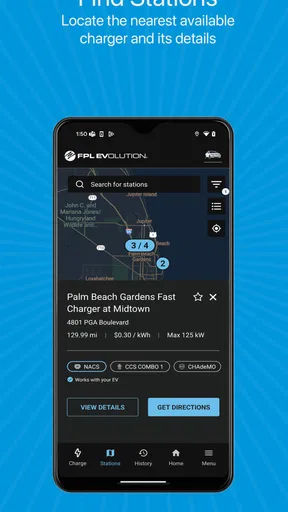
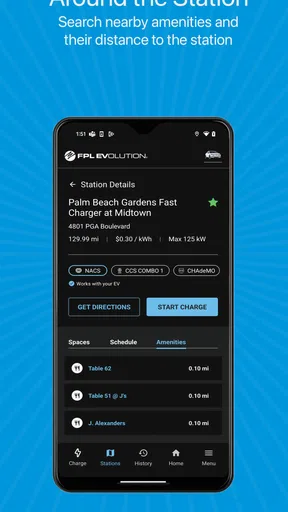
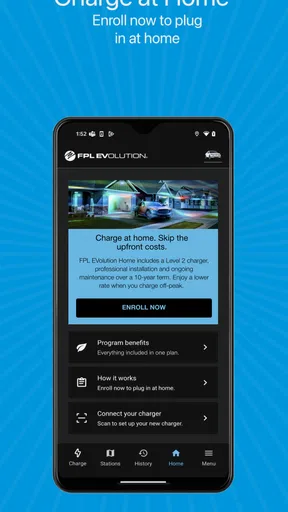
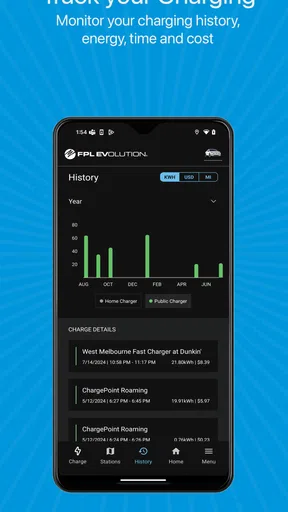
 Analysis by AppCompare
I approached FPL EVolution as a practical companion for electric-vehicle drivers in Florida rather than as a general-purpose car app. It comes from NextEra Energy, Inc and sits in the Auto & Vehicles category, with a clear focus on helping people make public charging part of an ordinary trip. The app is free, rated for Everyone, and its main appeal is straightforward: it is intended to make the charging side of electric driving feel less disconnected from the rest of the journey.
My overall impression is positive, especially if you already drive an EV in Florida and want a dedicated way to engage with the FPL EVolution charging network. It feels more useful as a regional tool than as a universal replacement for every charging service. That distinction matters. Someone who mostly charges at home may only open it occasionally, while a driver who regularly plans stops away from home can get much more value from having a focused app available.
How the app fits into everyday EV driving
The best way to understand this app is to picture a normal day rather than a technical demonstration. I might leave home with enough charge for the first part of a trip, then realize that traffic, an unexpected detour, or a longer stop will make a top-up sensible. In that situation, a charging-focused app is more convenient than searching through unrelated map results and hoping the information is current. FPL EVolution is built around that moment: finding a suitable charging opportunity and making the stop easier to manage.
That regional focus is also its main strength. A broad mapping application can show many charging locations, but it may treat them as just another point of interest. A dedicated service has a more direct purpose, which can reduce the number of steps between deciding to charge and actually doing it. I found that useful when thinking about a route in advance, but also for quick decisions during a trip when I did not want to compare several unrelated listings.
The app is not aimed only at experienced EV owners. A new electric-car driver can use it as a simple starting point for learning how public charging fits into travel. It gives the charging stop a defined place in the journey instead of leaving the driver to piece together information from a vehicle display, a map app, and separate network tools. That said, first-time users should still expect to spend a little time understanding how their vehicle, connector type, and the available station work together.
FPL EVolution is free to download, which makes trying it low-risk. Its store presence shows an average rating of 4.5 from around 1.1 thousand ratings, along with more than 50 thousand installs. Those figures suggest a useful level of adoption without making the app feel like a crowded, all-purpose platform. I would read that as evidence that it has found a specific audience, not as a guarantee that every station or trip will work perfectly for every driver.
What I liked about the current experience
The strongest part of the experience is the narrow purpose. When I open an app designed around EV charging, I am not looking for fuel prices, vehicle maintenance reminders, or general driving content. I want to answer practical questions: where can I charge, does the location fit my route, and can I deal with the stop without unnecessary confusion? Keeping the app centered on that job is more helpful than filling it with features that do not affect the next charging decision.
Worth Reading Before You Choose

EA SPORTS FC Mobile 26 Is a Bigger Football Game, but It Takes Time

Flipboard Shows What News Apps Must Do Beyond the Feed

Switching to Android Auto Means Rethinking Your Driving Routine

Google Calendar Makes a Crowded Week Easier to Manage

Ludo King Makes the Most of the Minutes Between Plans

Baby Panda World Brings Quick Play to Modern Phones, but Its Game Library Feels Busy
Another advantage is that it can serve two different habits. A careful planner can look at charging options before leaving, while a more spontaneous driver can use it when a trip changes. That flexibility is important because EV travel is not always predictable. Weather, road conditions, passengers, and errands can all change the amount of energy needed. I would rather have a dedicated charging reference ready than wait until the battery is low and start searching under pressure.
The app also makes sense for drivers who want to separate charging tasks from their car’s built-in interface. Vehicle screens are convenient, but they vary widely between manufacturers, and some drivers prefer to handle planning on a phone before getting behind the wheel. FPL EVolution gives that process its own place. I found this especially practical when preparing a route at home, where I could think through the stop without trying to operate a dashboard display.
What the version information tells us
The current version is 3.5.8, and the app was released on September 2, 2020. That combination tells me the product is not a brand-new experiment. It has had time to move beyond an initial launch and develop into a more established mobile service. I would still avoid assuming that a version number alone proves a particular feature has been added or improved, but it does suggest an ongoing product rather than a one-off utility.
For existing users, a mature version can be reassuring because the basic workflow has had an opportunity to settle. People who depend on an app during travel generally value consistency more than novelty. A charging tool does not need dramatic redesigns every time it is updated; it needs to remain understandable when the driver is busy, the route is unfamiliar, and the battery situation is changing.
At the same time, version history should not be confused with a promise about future development. I see the current release as the app’s present state, not proof that every hoped-for improvement is already available. The most useful way to judge it is by whether the current experience supports your charging routine today. Expectations about upcoming capabilities should remain separate from what the app already demonstrates.
How it compares with the usual alternatives
Most EV drivers end up using a combination of tools. The car’s navigation system may be best for route guidance, a general map app may be best for traffic and nearby businesses, and a charging-network app may be needed for station-specific tasks. FPL EVolution is most compelling when you want a focused regional charging companion rather than one application that tries to do everything.
A vehicle’s built-in system can be more convenient once you are already driving because it is integrated with the car. It may also understand the route in a way that a separate phone app does not. I would choose the vehicle interface for immediate navigation and use FPL EVolution before the trip or when I specifically need its charging-oriented view. The two approaches can complement each other instead of competing directly.
General map apps are useful for comparing charging with restaurants, shops, hotels, and other stops. They are often better when the charging stop is only one part of a larger plan. Their weakness is that charging information can feel buried among other points of interest. FPL EVolution is the better choice when the charging decision itself is the priority, particularly for someone whose regular driving is tied to the Florida network it serves.
Other charging services may be preferable for drivers who travel across many regions or regularly use several networks. In that case, a broader EV-planning tool can reduce the need to switch between apps. My recommendation is to keep FPL EVolution if it covers the places you actually drive, but not to treat it as your only charging reference if your routes routinely cross different service areas.
Three practical habits that make it more useful
First, I would check the app before leaving rather than waiting until the battery is nearly depleted. This is not just about finding a location. It gives you time to notice whether the planned stop fits the route, whether another stop would be more convenient, and whether the trip has enough flexibility if your plans change. The small amount of preparation can make the difference between a calm charging break and a stressful search.
Second, I would use it as a planning layer, not as a substitute for paying attention to the vehicle. The car’s estimated range is affected by driving conditions, and the app cannot remove that uncertainty. I would compare the intended stop with the vehicle’s own range estimate and keep a reasonable buffer. That is a better workflow than treating any single screen as an absolute guarantee.
Third, I would build a backup habit for unfamiliar routes. Even when an app is useful, a station can be busy, inconveniently located, or unsuitable for a particular vehicle. Before a longer drive, I would identify an alternative charging option using the car’s navigation or another mapping service. This is one of the app’s important trade-offs: its focused experience can simplify the first choice, but a second source is sensible when the trip has little room for error.
A fourth habit is to separate route planning from active driving. I would review the charging plan while parked, save the important details mentally or in the car’s navigation, and avoid handling the phone on the road. That sounds obvious, but charging apps are most helpful when they reduce distraction rather than create another reason to look down at the screen.
Where the experience can be less convenient
The regional focus that makes FPL EVolution useful can also limit it. If your driving regularly extends beyond the area where its network is relevant, you may need another app anyway. That means the service is not automatically the best choice for road-trippers who want one nationwide view. For those users, a broad charging directory or the vehicle manufacturer’s system may be more efficient as the first stop.
There is also a difference between discovering a charging location and completing a successful charging session. An app can help organize the search, but the real experience still depends on the station, the vehicle, the connector, the route, and the driver’s timing. I would not use any charging app as a reason to skip basic preparation. The app supports the decision; it does not eliminate every variable around it.
Drivers who charge almost exclusively at home may find that the app stays closed for long periods. That is not a flaw so much as a question of fit. If your daily commute is predictable and your home charger covers it comfortably, a dedicated public-charging tool may only become valuable for weekends, airport runs, or longer journeys. In that situation, the free price makes it reasonable to keep installed, but it may not become part of your daily routine.
Some users may also prefer having every vehicle function in one place. If you already rely heavily on a manufacturer’s app for charge level, scheduling, route planning, and car controls, adding another service can feel like extra account and screen management. I would keep FPL EVolution when its regional charging information solves a problem the car app does not solve; otherwise, the additional app may not justify itself.
Who should use it and who should look elsewhere
I would recommend FPL EVolution to Florida EV drivers who want a dedicated way to think about public charging. It is particularly suitable for people who are still building confidence with electric travel, drivers who make frequent regional trips, and households that occasionally need a reliable public-charging plan beyond home. Its free access also makes it easy to test without committing to a paid tool.
I would be more cautious about recommending it as the only app for someone who travels across states, drives several different EVs, or depends on a single universal dashboard for every charging network. Those drivers may be better served by combining the car’s navigation with a broader charging service. The right choice depends less on the app’s category than on the geography and variety of your actual trips.
It is also worth considering your comfort with planning. If you prefer to leave immediately and solve every detail on the road, the app may not change your habits by itself. Its value appears when you use it before the battery situation becomes urgent. I see it as a tool for reducing uncertainty, not as an automatic travel assistant that can make every decision without input.
What existing users can reasonably expect
For someone already using the app, the current version represents a stable point from which to judge the service. I would look for consistency in the tasks that matter most: opening it quickly, understanding the charging options, and moving from planning to action without confusion. If those basics fit your routine, there is a good reason to keep it as part of your EV toolkit.
Existing users should also keep their expectations practical. Product evolution is valuable when it improves clarity and reliability, but not every update needs to introduce a dramatic new feature. For this kind of app, small refinements can matter more than visual changes: clearer information, fewer unnecessary steps, and a smoother transition between planning and charging. Those are the areas I would watch when deciding whether a future release improves daily use.
The app’s age rating of Everyone is appropriate for a driving utility intended for a broad audience. That does not mean every driver will find the workflow equally intuitive, but it does make the product approachable for households with different levels of EV experience. I would still encourage new users to explore it while parked, before depending on it during a busy trip.
What I would watch as the product evolves
The most important thing to watch is whether the app continues to make regional charging decisions clearer without becoming overloaded. Its identity is strongest when it stays focused. Adding complexity simply to match general map apps could weaken the reason to use it, while thoughtful improvements to planning and station discovery would make the existing purpose more valuable.
I would also pay attention to how well it fits alongside vehicle navigation and broader charging tools. The best future for a regional app is not necessarily to replace every other service. It may be more useful if it becomes the dependable specialist that handles its own charging network well, while the car and general maps continue doing what they already do best.
Finally, I would judge future changes by real travel situations rather than by the number of new options shown on a screen. Can I make a plan before leaving? Can I adapt when an errand changes? Can I understand the next charging decision without distraction? Those are the tests that matter to me. They separate meaningful product evolution from cosmetic activity.
My final recommendation
FPL EVolution is a sensible free app for EV drivers who want a focused charging companion connected to their Florida driving routine. I like its clear purpose, its approachable positioning, and the fact that it can help both with advance planning and with unexpected top-up decisions. Its established release history and current version, 3.5.8, make it feel like a maintained product rather than a temporary experiment.
I would not present it as a universal replacement for a car’s navigation, a general map, or a multi-network charging service. Its strongest use case is narrower and more practical: helping the right driver organize public charging without adding another complicated layer to the journey. If you drive an EV in the region it serves, I think it is worth installing and testing during a normal trip.
My honest advice is to use it as your regional charging specialist, while keeping a backup planning method for unfamiliar or longer routes. That approach gives you the app’s main benefit without expecting it to solve every part of electric travel. For the audience it is built around, that is a useful balance, and it is why I would recommend giving FPL EVolution a place on the phone.
Pros
- Quickly check fantasy points
- rankings
- fixtures
- and player prices.
- Useful tools help compare options before making transfers or selecting captains.
- Clean layout makes key Fantasy Premier League data easy to find.
- Can support planning across upcoming gameweeks with fixture-focused information.
- A practical companion for managers who want more analysis than the official app.
Cons
- It is an unofficial companion
- so some data may be delayed or inaccurate.
- Advanced statistics can feel overwhelming for new Fantasy Premier League players.
- Several features may require an internet connection to work properly.
- Frequent updates may be needed when Premier League data or rules change.
- The app may include advertising or paid features depending on the version.
FAQs for FPL EVolution
What is FPL EVolution, and who is it designed for?
FPL EVolution is a fantasy football companion focused on helping Fantasy Premier League managers plan, analyze, and improve their teams. It is designed for both beginners who want clearer guidance and experienced managers who need additional statistics, fixture analysis, transfer ideas, and planning tools. It should be viewed as a decision-support app rather than an automatic replacement for your own strategy.
Does FPL EVolution connect directly to my official Fantasy Premier League account?
Depending on the version and available features, FPL EVolution may offer tools that work with your FPL team data or require you to enter information manually. Before signing in, check the app’s privacy details and permissions carefully. Never share your official password, authentication codes, or other sensitive account information unless the app clearly uses a secure, recognized login process.
What features can I expect to find in FPL EVolution?
The app is intended to provide practical tools for Fantasy Premier League planning, such as player and fixture analysis, transfer evaluation, team comparison, captaincy considerations, and longer-term planning. Exact features can vary by platform, subscription, or update. Some advanced statistics may be locked behind a paid plan, so reviewing the current pricing and feature list before downloading is recommended.
Is FPL EVolution free to download and use?
FPL EVolution may be available as a free download, but access to every tool or data feature is not necessarily free. Apps in this category commonly include optional subscriptions, in-app purchases, advertising, or premium analysis. Check the store listing for the latest pricing, trial conditions, renewal terms, and cancellation instructions before starting a subscription, particularly if you only need the app for a short period.
Can FPL EVolution guarantee better Fantasy Premier League results?
No fantasy football application can guarantee higher scores, successful transfers, or a better overall rank. FPL EVolution can help organize information and make decisions more systematic by highlighting trends, fixtures, player data, and possible strategies. However, injuries, rotation, unexpected lineups, and match events remain unpredictable. Use its recommendations as guidance and combine them with official team news and your own judgment.


